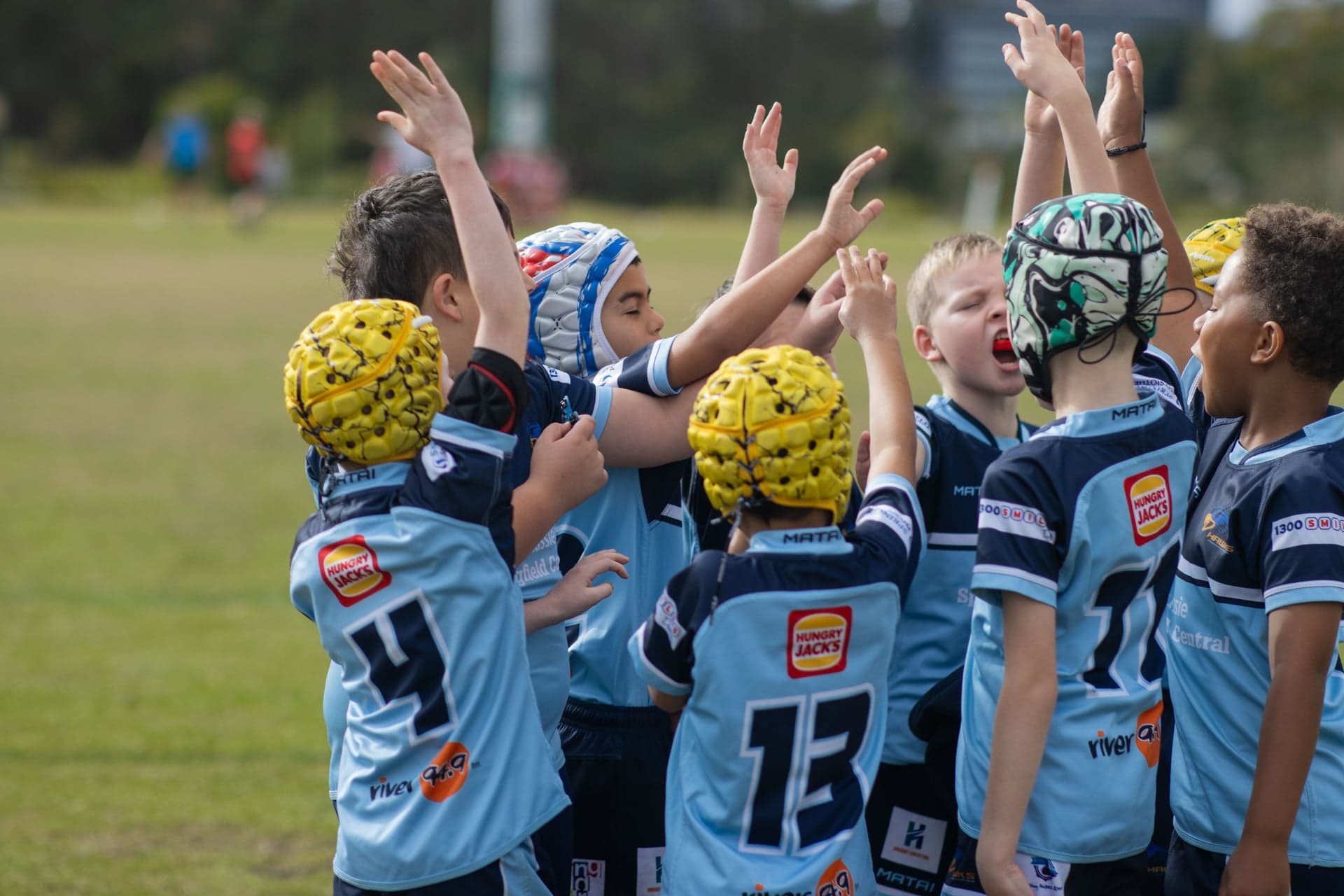
Parent's Guide to Junior Rugby
Everything you need to know before your child takes the field.
What Is Junior Rugby Union?
Junior rugby union is a structured, team-based sport governed by Rugby Australia with age-appropriate rules at every level. It teaches kids to run, pass, tackle, and work together — all within a framework that prioritises safety and enjoyment.
At the Springfield Lakes Hawks, we cater to players from age 4 through to seniors. Whether your child is a complete beginner or has played before, there is a place for them at our club.
Age Groups Explained
Rugby is structured so that children play against others of similar age and size. Here is how the age groups break down.
Walla Rugby (U5-U8)
A non-contact, tag-based introduction to rugby designed by Rugby Australia. Small-sided games focus on running, evasion, and catching in a fun, safe environment. No tackling, no scrums, no lineouts — just pure enjoyment and movement.
Junior Rugby (U9-U12)
Contact is progressively introduced with modified rules suited to each age group. Players learn tackling technique, rucking basics, and positional play. Teams grow from 10-a-side to 12-a-side as players develop strength and confidence.
Youth Rugby (U13-U16)
Full 15-a-side rugby with standard rules. Training includes structured fitness, tactical play, and set-piece work. Players can trial for representative teams and development squads through Queensland Rugby pathways.
Senior Rugby (18+)
Open-age rugby for adults of all experience levels. Whether you played as a junior or are picking up the game for the first time, senior rugby offers competitive matches, fitness, and a strong social community.
What to Expect on the First Day
First sessions can feel daunting for kids and parents alike. Here is a typical rundown so you know exactly what to expect.
Arrive Early
Get there 15 minutes before the session so your child can meet their coach, find their group, and settle in without rushing.
Meet the Coach
Introduce yourself and your child. Let the coach know if your child has any medical conditions, allergies, or if this is their first time playing rugby.
Warm-Up Games
Sessions start with fun warm-up activities like tag games and relay races. These get kids moving and help break the ice with teammates.
Skills & Drills
Age-appropriate drills cover passing, catching, running lines, and evasion. Coaches keep things engaging and adapt to different ability levels.
Small-Sided Games
The session wraps up with modified games so kids can put their new skills into practice. Everyone gets involved — no one sits on the sideline.
Wrap-Up & Debrief
Coaches bring the group together for a quick recap. It is a good chance to ask questions, grab a sausage sizzle, and plan for next week.
Gear Checklist
You do not need much to get started. Here is what to bring to training and game day.
Mouthguard
Mandatory at all sessions
RequiredRugby Boots
Moulded studs preferred
RequiredShorts & Socks
Club gear or plain dark colours
RequiredWater Bottle
At least 750 ml
RequiredSunscreen
SPF 50+ applied before training
RequiredHeadgear
Optional but recommended
OptionalSafety & Player Welfare
Your child's safety is our highest priority. Here is how we keep players protected.
Rugby Australia SmartRugby Framework
All coaches complete Rugby Australia's SmartRugby accreditation, which covers safe technique coaching, injury prevention, and age-appropriate training methods.
Qualified & Accredited Coaches
Every coach holds a current Blue Card (Working with Children check) and relevant coaching accreditations. Coaches attend regular development workshops.
First Aid at Every Session
Qualified first aiders are present at every training session and game. We maintain fully stocked first aid kits and have emergency action plans in place.
Concussion Protocols
We follow Rugby Australia's concussion management guidelines. Any player suspected of a concussion is immediately removed from play and must obtain medical clearance before returning.
Why Kids Benefit from Rugby
Rugby develops the whole child — physically, socially, and mentally.
Physical Fitness
Rugby develops cardiovascular endurance, strength, speed, agility, and coordination. Kids who play rugby build a broad athletic base that benefits them in any sport.
Social Skills & Teamwork
Rugby is the ultimate team sport. Players learn to communicate, trust their teammates, resolve conflicts, and work together toward a common goal — skills that serve them well beyond the field.
Mental Resilience
The game teaches kids to handle pressure, bounce back from setbacks, and push through challenges. Learning to tackle adversity on the field builds real-world confidence and mental toughness.
Frequently Asked Questions
Is rugby safe for young children?
Can my child play if they have never tried rugby before?
How much does it cost to register?
When does the rugby season run?
How much time does junior rugby require each week?
Can girls play rugby at Springfield Lakes Hawks?
Ready to Give Rugby a Try?
Join the Springfield Lakes Hawks and give your child a season of fitness, friendship, and fun. Registrations are open now.